Every four-wheel-drive truck and SUV around Grover carries a second gearbox most owners forget exists: the transfer case, bolted behind the transmission. It splits power between the front and rear axles, provides low range for crawling work, and in many modern trucks it is quietly engaged far more often than the driver realizes, through automatic modes that decide on their own. It has its own fluid, its own wear items, and its own failure sounds, and it almost never gets serviced on time because nothing on the dashboard asks for it.
This calendar lays out what the transfer case needs across a year of Piedmont use, when to pay attention to it, and what the signs of neglect sound like before they turn into chain and bearing work.
What is actually inside the case
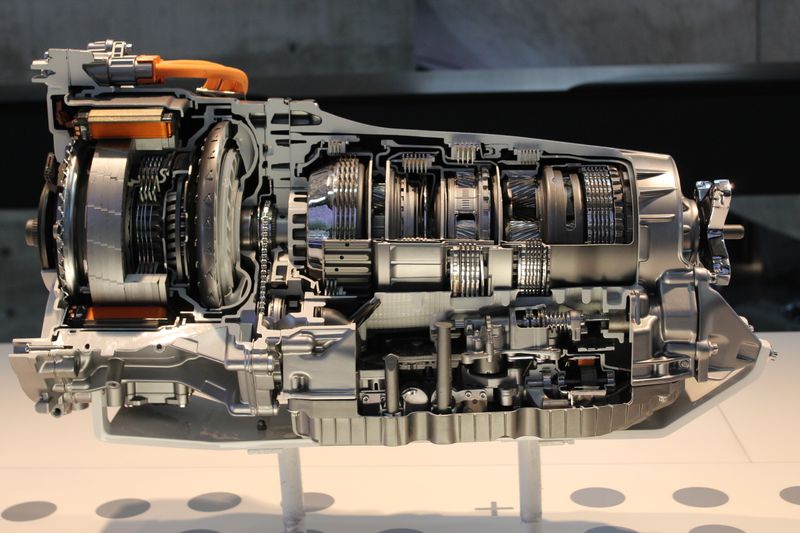
A transfer case is simpler than a transmission but not crude. A chain or gear set drives the front output, bearings support the shafts, a shift mechanism or electric motor selects the mode, and seals keep a relatively small amount of fluid inside. That small capacity is the key fact. Where a transmission holds a large volume of fluid, a transfer case holds a fraction of it, so contamination and wear concentrate faster, and a slow seal leak that a transmission might tolerate can run a transfer case low enough to damage it.
The fluid itself varies by design. Some cases take automatic transmission fluid, some take gear oil, and some take a specific transfer case fluid. They are not interchangeable, and using the wrong one is a real and avoidable cause of shift complaints and wear.
The year, season by season
| When | What to do | What you are catching |
|---|---|---|
| Early spring | Check fluid level and condition; inspect for seal leaks at both output shafts | Winter's occasional ice and any low-range use will have shown up as leaks or darkened fluid. Catch a weeping seal before summer towing and farm work. |
| Late spring | Exercise every mode: run through 2WD, auto, 4-high, and 4-low on a suitable surface | Shift motors and mechanisms that sit unused for months can stick. Cycling them before you need them is the cheapest fix there is. |
| Summer | Listen for whine or growl under load; watch for binding in tight turns in auto mode | Heat and towing loads expose a stretched drive chain and worn bearings. Binding can point to mismatched tire sizes wearing the case's clutch system. |
| Fall | Service the fluid if it is due by miles or dark in color; confirm low range engages smoothly | Hunting season and firewood work are when low range earns its keep around Cleveland County. Fresh fluid before that work beats a failure in the woods. |
| Winter | After any ice-storm 4WD use, check for new leaks and odd noises once roads clear | Hard low-traction work and cold-thickened fluid stress seals. A quick look after the event catches damage while it is still a seal, not a case. |
| By mileage, year-round | Follow the severe-service interval in your manual if you tow, run gravel daily, or use 4WD often | Most transfer case fluid intervals run in the tens of thousands of miles, and severe use shortens them. The small fluid volume makes this service quick and inexpensive relative to the part it protects. |
The sounds and feels of a case asking for help
A stretched drive chain is the classic transfer case noise: a rhythmic clunk or ratcheting pop under load, especially accelerating in 4WD, as the loose chain slaps or skips. Bearing wear is a growl or whine that follows road speed. A case low on fluid may whine and run hot. Shift trouble shows up as a flashing mode light, a clunk engaging, or a truck that will not take low range at all, which is often the electric shift motor or its position sensor rather than the case internals.
Binding and crow-hop in tight parking-lot turns with 4WD engaged on dry pavement deserves a special note. Part-time systems are not meant to be locked on dry pavement, and the binding is the driveline winding up against itself. If it happens in automatic mode without your selecting 4WD, that is a fault worth diagnosing, because the case is engaging when it should not.
Tires: the transfer case's silent partner
Four tires that do not match in actual circumference make the front and rear axles turn at slightly different speeds, and an automatic or full-time transfer case absorbs that difference constantly, wearing its internal clutch or coupling every mile. Keep the set matched, rotate on schedule, and replace in fours on these systems. A single new tire beside three worn ones is a false economy that bills the transfer case later.
This is also why a shop will ask about tire history during a 4WD diagnosis. At Cleveland Transmission Service, a binding complaint starts with a tape measure around all four tires before it starts with the case, because the tape measure sometimes ends the diagnosis.
Common questions
How often does transfer case fluid really need changing?
Follow your manual's interval, and use the severe-service schedule if you tow or use 4WD regularly. The fluid volume is small, so the service is quick, and it is the main protection the chain and bearings have.
Can I drive with a transfer case leak?
Not for long. The case holds little fluid, so a modest leak can drop it to damaging levels far sooner than a transmission leak would. A seal replacement early is a small job next to a case rebuild.
My truck will not go into low range. Is the case ruined?
Usually not. The electric shift motor and its sensor fail far more often than the case itself, and low range also requires the right conditions, stopped or nearly stopped with the transmission in neutral on most models.
Photos in this guide are representative stock images.
← All guides from Cleveland Transmission Service← Back to Cleveland Transmission Service