Three kinds of transmissions sit under cars around Grover, and they do not break the same way. A conventional automatic uses planetary gears and a torque converter. A manual uses a clutch pedal and a stack of gears you select yourself. A CVT, short for continuously variable transmission, uses a steel belt or chain running between two pulleys that change size as you drive. Because the parts are different, the warning signs are different too, and sorting the symptom by the type of gearbox is the fastest way to avoid guessing.
That matters because the wrong guess gets expensive in the wrong direction. A worn clutch in a manual is a normal wear job. A slipping belt inside a CVT usually means internal damage that fluid alone will not undo. The steps below work from what you feel in the driver's seat toward the part most likely behind it.
Step one: name the symptom in plain words
Before anything comes apart, describe the problem the way you would to a neighbor. Does the engine rev rise while road speed stays flat? Does the car shudder at a steady speed, hesitate before it moves from a stop, or grind going into one particular gear? Does it only misbehave hot, after a run toward Kings Mountain, or from the first cold start of the day? Heat, load, and speed are clues. A transmission that acts up only when hot is often telling you about fluid that has thinned and worn, or about a part that expands and loses its grip as temperature climbs.
Write the symptom down with the speed and conditions attached. "Slips at 35 under light throttle, fine at highway speed" points a technician somewhere useful. "It just feels wrong" does not, and it can lead to parts being replaced on a hunch.
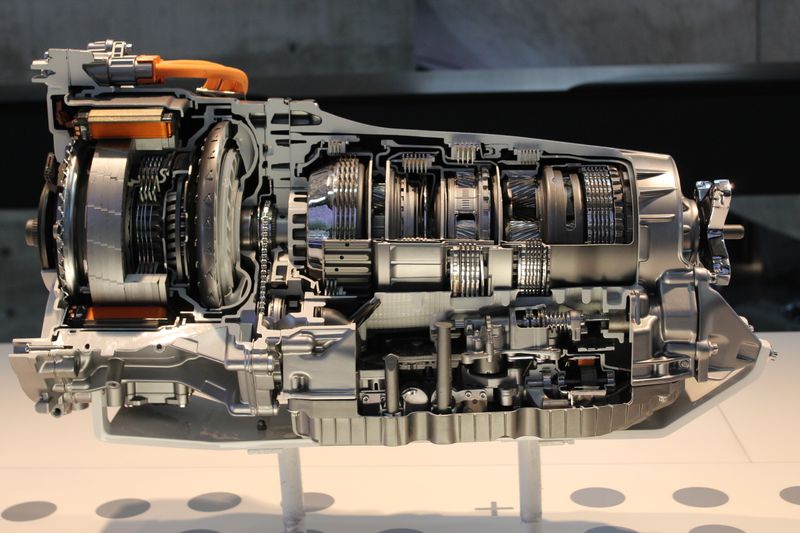
How a conventional automatic fails
A torque converter automatic changes gears by applying clutch packs inside the case with hydraulic pressure. When those clutch packs wear, shifts get soft, then late, then they flare, meaning revs jump between gears. When the torque converter's lockup clutch wears, you get a shudder at steady cruise instead of a clean shift problem. Low or burnt fluid makes all of it worse because pressure drops and friction material sheds into the fluid, which then circulates the damage.
The pattern to recognize is progression. Automatics rarely go from perfect to dead in one trip unless something breaks outright or fluid is lost from a line or seal. More often there are weeks of small delays and soft shifts first. Catching it in that window is the difference between a service-level repair and a rebuild.
How a manual fails
A manual gearbox itself is simple and tough. Most manual complaints live outside the gear stack, in the clutch. A clutch that is worn slips under load, worst in higher gears and on grades. Release bearing trouble makes noise that changes when you press the pedal. Worn synchronizers cause a grind or a block going into one gear, often second or third, while the rest shift clean.
The sorting question is the pedal. If the noise or feel changes with pedal position, think clutch and release parts. If one gear grinds regardless of pedal work, think synchronizer. If every gear is suddenly hard to engage, check the linkage or clutch hydraulics before condemning the box itself.
How a CVT fails
A CVT has no fixed gears to shift between, so it does not flare or bang between ratios the way an automatic does. Its failures sound different: a whine that rises with speed, a hesitation or rubber-band feel on takeoff, judder under light acceleration, or a sudden limp mode with a warning light. The belt or chain and the pulley faces are the wear surfaces, and once they are scored, the unit loses its grip in a way no adjustment restores.
CVTs are also the most sensitive of the three to fluid. The fluid is specific to the design, the level and condition matter a great deal, and heat breaks it down faster, especially in summer stop-and-go traffic. Skipped fluid service that an old automatic might shrug off can shorten a CVT's life noticeably.
Work the problem in order
- Identify your type. Check the owner's manual or the shift pattern. A car with no fixed shift feel and a single drive position that never steps is likely a CVT; a third pedal means manual.
- Check the fluid if your model allows it. Many newer units are sealed and have no dipstick, which is a shop check. Where you can check, note level, color, and burnt smell.
- Match the symptom to the design. Flare between shifts points to automatic clutch packs. Pedal-linked noise points to a manual clutch. Whine and judder with no shifts at all points to a CVT belt or pulleys.
- Note when it happens. Cold only, hot only, one speed, one gear, under load only. Record it before the visit so the test drive can reproduce it.
- Get codes read. Modern units of all three types report pressure, ratio, and temperature faults that narrow the search before anything is opened.
- Stop driving a unit that slips badly. Continued slipping generates heat and debris in automatics and CVTs, and turns a repairable unit into a core. A manual with a slipping clutch will also strand you without much more warning.
Shops that handle all three designs, like Cleveland Transmission Service, start from this same sorting. The point of doing it yourself first is not to diagnose the exact failed part. It is to arrive with a symptom described well enough that the first test drive confirms something instead of hunting for it.
Common questions
Can fluid service fix a slipping CVT?
Sometimes, if the fluid is simply old and the belt surfaces are still sound. If the belt or pulleys are already scored, fresh fluid will not restore grip, and a shop will usually find metal debris that settles the question.
Is a manual transmission cheaper to keep than an automatic?
Generally, yes, over a long life. The gearbox itself rarely fails, and the main wear item is the clutch, which is a predictable replacement rather than a full internal rebuild.
My automatic only acts up when it is hot. Why?
Hot fluid is thinner, worn seals leak more internally, and tired clutch material grips less. Heat-related symptoms usually mean wear is already present and will get worse through a Piedmont summer, not better.
Photos in this guide are representative stock images.
← All guides from Cleveland Transmission Service← Back to Cleveland Transmission Service